Estimated reading time: 6 minutes
Drones have become an essential part of many industries, particularly the construction industry.
They are now used in almost every industry, and most businesses have a budget for them. The term “drone” comes from the world of science fiction. They are used for a variety of purposes, including filming, military surveillance, and recreational activities. Also are a combination of aerospace, robotics, and mechatronics. They also can range from fully autonomous military-grade drones to the typical remote-controlled you might see a child flying in a park.
Table of contents
What Is A Drone?
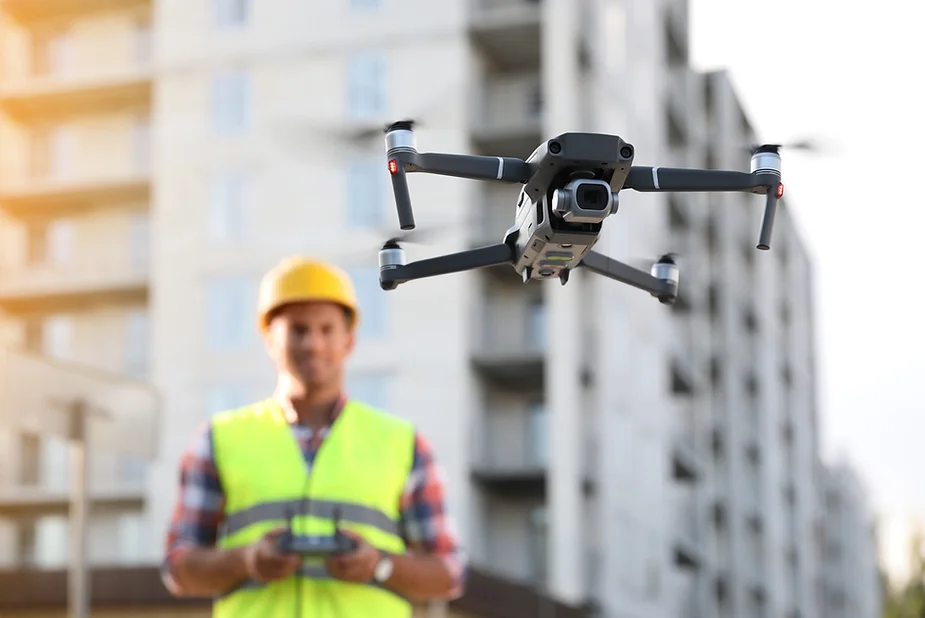
A drone is a type of unmanned aircraft. also referred to as unmanned aircraft (UAVs) or unmanned aircraft systems (UAS). It is essentially a flying robot that can be controlled remotely or autonomously by software-controlled flight in its integrated systems, which work in tandem with sensing devices and a global positioning system (GPS).
Which were initially designed for the military and aerospace industries, have found their way into the mainstream due to the increased levels of safety and efficiency they provide. These robotic UAVs operate without a pilot and with varying degrees of autonomy. The level of autonomy of a it can range from remote location piloted (a human controls its movements) to high-tech autonomy (a system of sensors and LIDAR detectors calculates its movement).
It can travel at different heights and as well different ranges. Close-range drones can typically travel up to three miles and are mostly used by hobbyists. The Close-range drone has a range of approx 30 miles. Short-range drones, which can travel up to 90 miles, are primarily used for covert operations and intelligence gathering. Mid-range unmanned aerial vehicles (UAVs) have a 400-mile range and can be used for intelligence gathering, scientific studies, and meteorological research. The longest-range are known as “endurance” UAVs, and they can travel beyond 400 miles and up to 3,000 feet in the air.
How-to: Start Using a Drone Safely
How-to: Start Using a Drone Safely
- Understand drone basics
Learn what a drone is and how it operates
- Choose the right drone
Select a drone based on your needs (photography, inspection, etc.).
- Read the user manual
Understand controls, features, and safety instructions
- Check local regulations
Make sure drone use is allowed in your area
- Practice in open areas
Start flying in safe, open spaces
- Maintain visual line of sight
Always keep your drone within sight while flying
Drone Applications Across Industries
- For Military Use
The military is probably the oldest, most well-known, and most contentious application of UAVs. In the early 1940s, the British and American militaries began using primitive forms of UAVs to spy on the Axis powers. UAVs today are far more advanced than UAVs of yesteryear, with thermal imaging, laser range finders, and even airstrike tools. The MQ-9 Reaper is the most visible military drone in use today. The aircraft is 36 feet long, can fly undetected for 50,000 feet, and is outfitted with a variety of missiles and intelligence-gathering tools.
- For Delivery Purpose
Delivery drones are typically unmanned aerial vehicles (UAVs) that transport food, packages, or goods to your front door. These flying drones are known as “last mile” delivery UAVs because they make deliveries from nearby stores or warehouses. Instead of relying on delivery people with inefficient trucks, retailers and grocery chains across the country are starting to turn to UAVs as a more efficient delivery alternative. These drones can deliver an impressive 55 pounds of goods outside your front door without requiring you to leave your house. Amazon, Walmart, Google, FedEx, UPS, and many other major corporations are all currently testing various versions of delivery drones.
- For Emergency Rescue
Because of the scope or severity of the disaster, it is not always safe to send humans into a rescue situation. This is where drones come into play. In the event of a capsized boat or a drowning person, officials can deploy an Autonomous Underwater Vehicle (AUV) to assist in the rescue. Drones are used to search for people who are trapped in an avalanche. Kaman has even developed a pilotless helicopter called the K-MAX that can carry more than 6,000 pounds of cargo. The K-MAX has already been used to fight fires in China and Australia.
- For Agriculture Use
Yes, drone plays a very important role in agriculture. They also have proven to be beneficial to the agriculture industry, providing farmers with a variety of options for optimizing their farms to maximize efficiency and reduce physical strain. UAVs make field surveys, seeding over fields, tracking livestock, and estimating crop yields easier while saving agriculture professionals valuable time.
- For Wildlife Use
UAVs are a less expensive and more efficient way to conserve wildlife. With humans on the ground, tracking wildlife populations is nearly impossible. The ability to track roaming types of animals, varying from Orangutans in Borneo to Bison on the Great Plains, allows wildlife conservationists to gain a better understanding of the health of their species and ecosystems. Conservation drones are also useful in the fight against poaching in Asia and Africa.
- For Medicine
Instead of relying on dog sleds, snowmobiles, or ambulances that can’t handle the snow, Alaskans are turning to drones to get life-saving medical supplies delivered quickly.
They are also being used to transport donated organs to transplant recipients. A kidney was recently transported from one hospital in Maryland to another in under five minutes using a specially designed drone.
- For Photography
UAVs have been a boon to aerial photographers who use UAVs to capture expansive shots.
Have you ever wanted to get a bird’s-eye view of your favourite city, beach, or building? There are drones designed specifically for photography that offer a new perspective on some of your favourite locations.
Do you need a license to fly a drone ?
Until 2016, commercial businesses that used UAV technology, regardless of industry, were required to have a pilot’s license. However, new government regulations require those piloting commercial UAVs to obtain a Remote Pilot Certificate by passing an aeronautical knowledge test. The exam has 60 multiple-choice questions, regulations to Unmanned Aerial System (UAS) rating privileges, limitations, and flight operation, effects of weather on UAS performance, emergency plans, airport regulations, decision making, maintenance, and more are among the topics covered. To take the exam, you should be at least 16 years old, be able to read, understand, speak, and write English, and be physically and mentally fit enough to fly a drone.
Summing Up
UAVs will be used by many businesses and government agencies. Complementary technologies such as 5G, augmented reality, and computer vision is supposed to propel drone market growth and improve drone communication and intelligence. As the use of personal and commercial drones grows, government agencies will refine their rules and regulations.
Frequently Asked Questions About Drones
It is an unmanned aerial vehicle (UAV) that can be remotely controlled or fly autonomously.
They are used in industries like agriculture, delivery, inspection, photography, and emergency response.
Yes, commercial drone operators usually need certification depending on local regulations.
Yes, if operated properly and in compliance with safety guidelines and airspace regulations.
Curious about how UAV can transform your operations?
Contact NineTenths today to learn how advanced drone technology can support industries such as construction, inspection, mapping, and security with faster data collection and smarter decision-making: