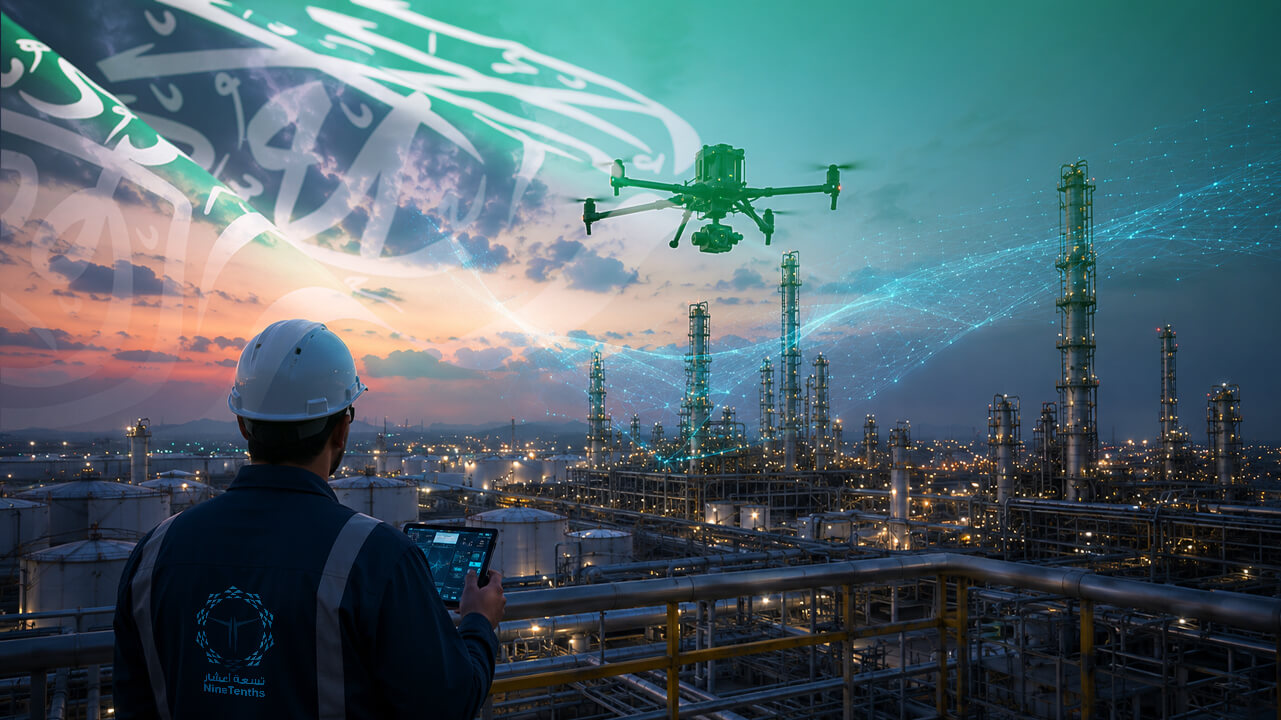
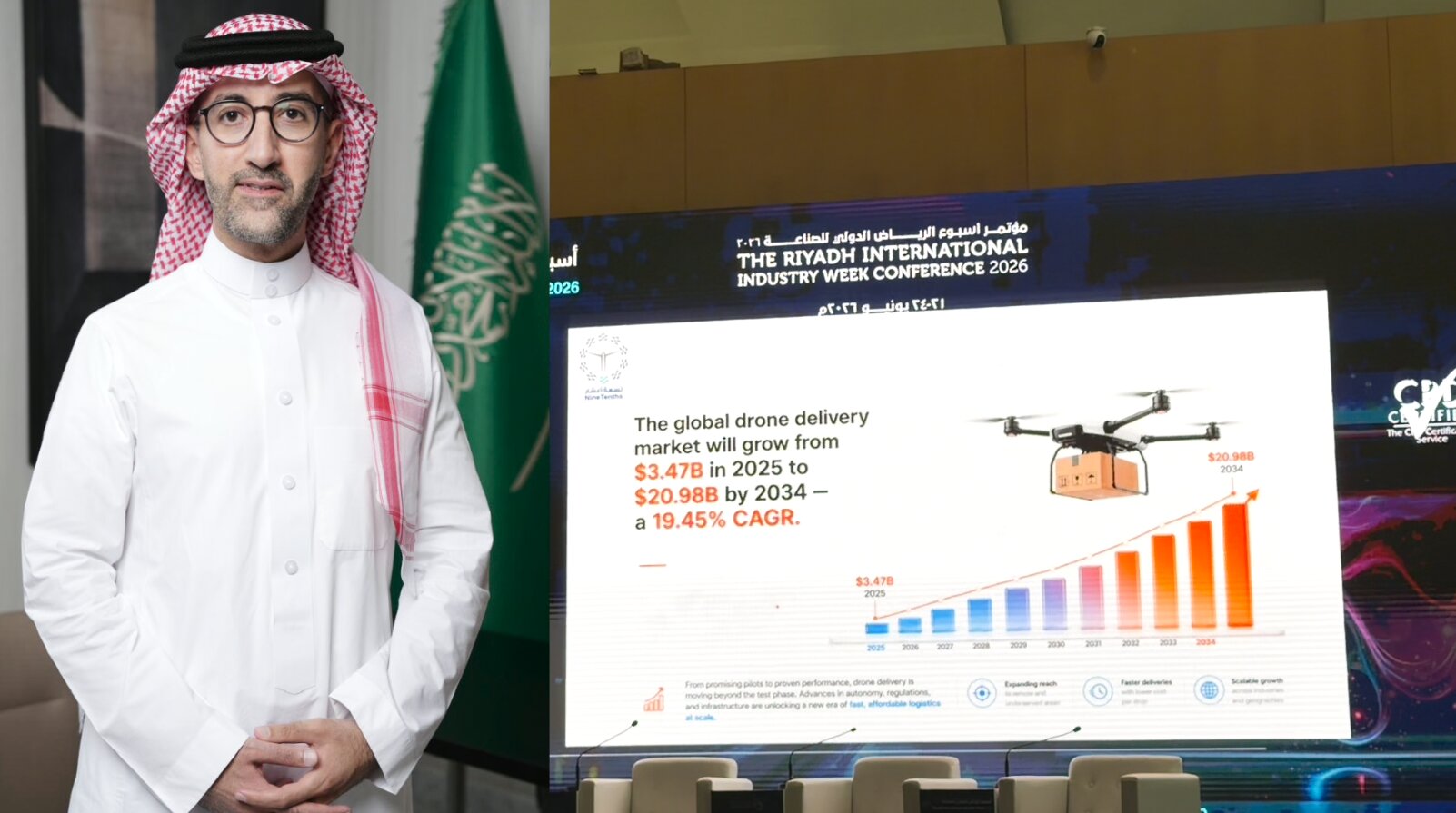
Delivery is a vital service that connects people and businesses across the world. However, traditional delivery methods face many challenges, such as traffic congestion, high costs, environmental impact, and limited accessibility. That’s why DJI has introduced the DJI Flycart 30, a revolutionary aerial delivery drone that can overcome these obstacles and provide a safe, efficient, and economical air transport solution.
- It features two delivery modes: cargo/container and crane/winch.
- With two batteries, the new drone can carry a maximum load of 30 kg for a distance of 16 km.
- The DJI FlyCart 30 is an innovative and exciting development in the drone delivery industry.
After its debut in China last year, the DJI FlyCart 30 delivery drone is now available everywhere, including the Kingdom of Saudi Arabia.
Table of contents
The DJI Flycart 30 is not only a delivery drone, but also a smart and intelligent one. It has a Delivery Hub software that allows users to plan, execute, manage, and monitor delivery missions with ease. Users can set up delivery routes, assign tasks, track progress, and view real-time data and video feeds. The software also integrates with third-party platforms, such as e-commerce, logistics, or emergency services, to enable seamless collaboration and coordination.
With the DJI Flycart 30, delivery is no longer restricted by physical geography or logistical limitations. It can reach remote areas, such as mountains, islands, or deserts, where conventional delivery vehicles cannot access. also can perform urgent tasks, such as delivering medical supplies, rescue equipment, or humanitarian aid, where speed and safety are critical. It can also reduce the carbon footprint and noise pollution of delivery, by using electric power and flying at low altitudes.
Features of the DJI FlyCart 30:
The DJI FlyCart 30 is a new aerial delivery drone that can carry up to 30 kg of payload over 16 km with dual batteries, or 40 kg over 8 km with a single battery. It has a coaxial four-axis, eight-blade, multi-rotor configuration with carbon fiber propellers and a maximum flight speed of 20 m/s. It also has a foldable design for easy transport in a standard-sized vehicle.
Some of the key features of the DJI FlyCart 30 are:
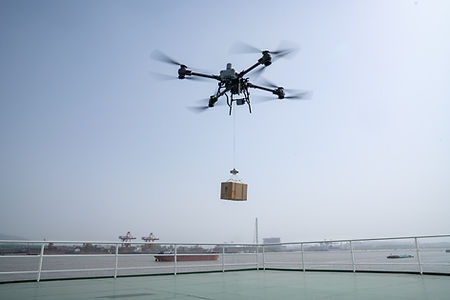
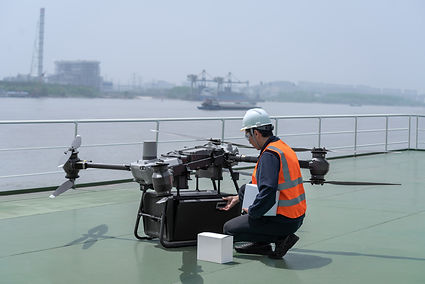
- It supports two payload configurations: cargo mode and winch mode, to meet different delivery needs.
- It has a built-in dual active phased array radar and binocular vision system for all-weather multi directional intelligent obstacle sensing.
- It has a built-in ADS-B signal receiver for timely warnings of nearby crewed aircraft.
- It has a built-in parachute for emergencies, ensuring a stable landing and protecting people and property.
- It has a DJI O3 transmission system that ensures a stable connection up to 20 km.
- It has a dual operator mode that allows control transfer between two pilots in different locations.
- It has a self-heating battery system for optimal performance in low temperatures.
- It has a standard propeller system that is optimized for altitudes from 0-6,000 m and supports flight up to 3,000 m with a 30 kg payload.
The DJI FlyCart 30 is designed to enhance efficiency and flexibility in delivery operations, including mountain, offshore, and emergency rescue transportation. It is set to become a trusted solution for industries worldwide
Additional important characteristics are as follows:
Heavy load: maximum carrying weight of 40 kg (single battery); maximum carrying weight of 30 kg (dual batteries).
Extended Range: Up to 28 km with no weight and two batteries; up to 16 km with a 30-kg load and two batteries. 18 minutes is the maximum flight time while using two batteries and a 30 kg load.
All-weather Operations: IP55 weather protection; -20°C to 45°C working environment temperature; 12m/s maximum wind-speed resistance.
Robust Signal: The DJI FlyCart 30 has a DJI O3 image transmission system, which allows for an image transmission range of up to 20 km (FCC) or 8 km (CE). Operators stand to gain from improved image transmission with 4G as well.
Improved safety features: include twin radar, an integrated ADS-B signal receiver, a built-in parachute, flight redundancy, and multidirectional, all-weather, intelligent obstacle avoidance during flight.
DJI Delivery Hub: One-stop airborne cloud platform. Plan equipment jobs efficiently, manage team resources centrally, fully regulate operation dynamics, and statistically analyze multi-dimensional data.
PSDK Development: By enabling third-party integration, such as spotlights and loudspeakers, the DJI FlyCart 30 facilitates PSDK development.
Advantages of Delivery Drones:
Delivery with drones has numerous advantages. Among them are:
Improved logistics: When carriers are arranging routes to get from a warehouse to a customer, it can be difficult for traditional vehicles, like vans, to stay on the highways during deliveries. Drone deliveries make the logistics of the operation significantly more efficient because they are made in a direct line from the sorting center to the package’s destination.
Speed: Compared to traditional delivery techniques, drone deliveries are significantly faster because they are effectively a direct-to-customer airmail option.
Less Traffic: The bulk of consumer deliveries weigh less than five pounds, which makes them perfect for drone technology, according to Amazon, which has been testing delivery drones. Right now, delivery cars are becoming overcrowded with all of those products. There would be less need for delivery trucks to be on the road at once if drone deliveries could handle all of those lightweight products.
Cost: Although drone technology may have a high initial cost, over time it will become more cost-effective because drone deliveries require significantly less labor.
Environmentally friendly: Since most drones are powered by electricity, they are quite eco-friendly. Carbon emissions would also decrease as there would be fewer delivery trucks on the road.
How to Use the DJI FlyCart 30 for Efficient Deliveries:
How to Use the DJI FlyCart 30 for Efficient Deliveries:
- Plan your mission
Use DJI DeliveryHub software to create routes and assign tasks
- Prepare payload
Select cargo mode or winch mode, secure goods up to 30–40 kg
- Check weather & safety
Confirm all-weather readiness (IP55), check wind and temperature.
- Pre-flight inspection
Verify batteries, propellers, radar, and ADS-B systems
- Launch & monitor
Fly along planned routes and track progress with real-time video feed.
- Landing & recovery
Utilize parachute or standard landing; recharge batteries for next mission.
- Analyze & optimize
Review flight data in DeliveryHub to improve efficiency
What Applications Do Delivery Drones Have?
There are several possible applications for delivery drones in a variety of industries.
E-commerce and retail: Drone deliveries have the potential to completely transform how goods are transported and delivered to consumers. They can shorten the time it takes for customers to get their purchases by enabling faster and more effective delivery of online orders.
Medical Supplies: Drone deliveries can be utilized to carry medical supplies and equipment, including vaccines, prescription drugs, and even organs up for transplant. Drones can be used to transfer this vital and perhaps life-saving cargo between hospital locations and medical facilities, as well as to remote or disaster-affected areas where prompt delivery is essential.
Disaster Relief: Drones are able to rapidly provide vital supplies, such as food, water, and medical assistance, to places devastated by natural catastrophes that may be challenging to reach by conventional means.
Remote Areas: Drones are capable of delivering items to isolated areas, such as rural settlements or areas with poor road systems. Delivering basics like food, medication, and other essentials is especially helpful in this regard.
Food Delivery: A few businesses are investigating the use of drones to transport restaurant orders to patrons.
Offshore Transport: Carry items from shore to ship or to offshore platforms. Delivery drones enable immediate dispatching and mobile transportation. They combat the high cost of supply ships and helicopters, and tackle the problem of low frequency and slow response.
NineTenths: Your Top Choice for Cutting-Edge DJI Drone Delivery Solutions in Saudi Arabia
In light of DJI’s groundbreaking announcement of the FlyCart 30, NineTenths continues to affirm its position as the leading provider in Saudi Arabia for the drone delivery sector. The FlyCart 30‘s innovative design promises to revolutionize the market with its enhanced capacity and efficiency. At NineTenths, we are dedicated to offering the most advanced solutions by closely following such pivotal industry developments. Our expertise ensures that we not only stay ahead of the curve but also provide our clients with state-of-the-art technology like the FlyCart 30, optimizing delivery operations and driving future success.
The DJI Flycart 30 is a game-changer for delivery in Saudi Arabia and beyond. It can help businesses, public agencies, and individuals to deliver and receive goods faster, cheaper, and greener. also can create new opportunities and markets for delivery, such as e-commerce, agriculture, or tourism. It can also improve the quality of life and well-being of people, by providing them with access to essential goods and services.
Summing Up:
The DJI FlyCart 30 is a game-changing delivery drone that improves speed, cost-efficiency, and environmental impact. NineTenths offers cutting-edge solutions in Saudi Arabia, enabling businesses and agencies to access remote areas, respond faster in emergencies, and embrace the future of drone logistics.
Frequently Asked Questions About the DJI FlyCart 30
The DJI FlyCart 30 is an industrial drone designed for fast, efficient, and eco-friendly aerial deliveries up to 40kg.
It can carry up to 40kg with a single battery or 30kg with dual batteries.
Two modes: cargo/container mode and crane/winch mode for different delivery needs.
Up to 28 km with no payload, 16 km with a 30kg payload using dual batteries.
Yes, it has IP55 weather protection, -20°C to 45°C operating range, and can handle winds up to 12 m/s.
Twin radar, ADS-B receiver, built-in parachute, multidirectional obstacle avoidance, and flight redundancy.
It allows users to plan, execute, monitor, and manage delivery missions, track progress, and integrate with third-party platforms.
Yes, it can reach mountains, islands, deserts, and other hard-to-access locations.
E-commerce, medical supplies, disaster relief, food delivery, offshore transport, and emergency services.
Businesses can optimize delivery operations, access remote locations, reduce costs, and improve speed and efficiency.
Interested in the future of drone delivery and logistics?
Contact NineTenths today to learn how advanced drone delivery solutions like the DJI Flycart 30 are transforming the logistics landscape, enabling faster, safer, and more efficient operations