
🌍ROV Port Infrastructure Inspection: Bringing Underwater Assets into View Without Unnecessary Diver Exposure
Project Overview
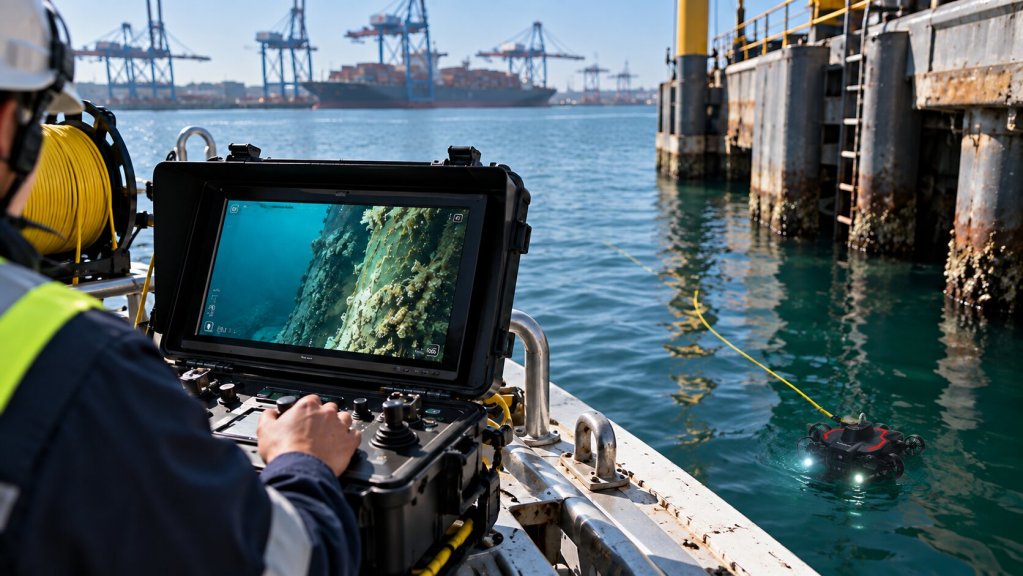
Much of a port’s critical infrastructure sits below the waterline, where it cannot be easily seen or assessed. For this project in Saudi Arabia, NineTenths carried out an ROV port infrastructure inspection using a Remotely Operated Vehicle (ROV) controlled from the surface, giving the inspection team a live view of submerged structures while reducing unnecessary exposure of personnel to the underwater environment.
Project at a glance: Industry: Ports & Marine Infrastructure | Application: Underwater Infrastructure Inspection | Technology: Remotely Operated Vehicle (ROV) | Location: Saudi Arabia | Service Provider: NineTenths

Key Takeaways
- NineTenths conducted an ROV port infrastructure inspection in Saudi Arabia, using a Remotely Operated Vehicle for underwater assessments.
- This approach minimizes diver exposure while providing real-time visibility of submerged structures and creating a digital inspection record.
- The ROV technology can adapt to visibility challenges by integrating additional sensors like sonar, enhancing inspection capabilities.
- The ROV-first method allows for targeted diver intervention only when necessary, improving safety and efficiency.
- Overall, ROV port infrastructure inspections provide clearer visibility and valuable historical data for informed maintenance planning.
The Challenge
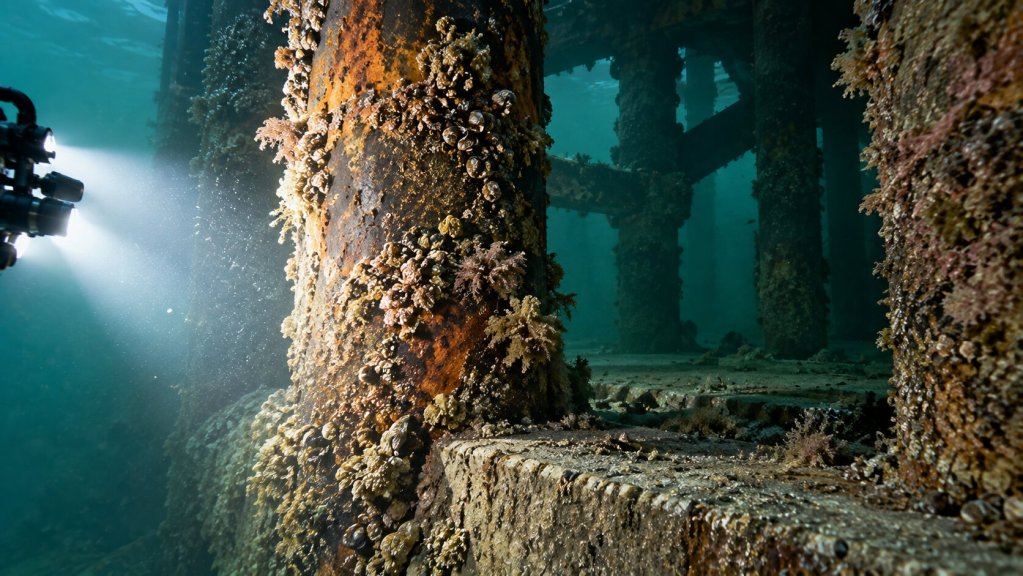
Quay walls, piles, foundations, and other submerged structures are continuously exposed to water, currents, marine growth, and physical loading. Over time, these conditions can contribute to corrosion, deterioration, and structural damage.
The core question is simple to state but hard to solve: how do you inspect what you cannot easily see?
Traditional underwater inspections often rely on divers. Divers remain essential for many types of underwater work, but placing personnel in the water for every inspection can add operational and safety considerations — particularly around busy ports, difficult visibility, and submerged structures. The requirement was to obtain clear, reliable information about the underwater condition of the infrastructure while reducing unnecessary exposure of personnel.
Our Approach
NineTenths proposed an ROV-based approach, using a remotely operated underwater vehicle to carry out the initial visual inspection. Rather than placing an inspector underwater, the ROV was controlled remotely from the surface and navigated around the submerged infrastructure, giving the team a live view of the underwater environment. This allowed the team to inspect areas of interest while remaining at the surface.
Inspection Scope
The ROV inspection can cover areas such as:
- Quay walls
- Piles
- Foundations
- Berthing structures
- Submerged structural components
When Underwater Visibility Becomes a Challenge
Underwater inspection does not always happen in ideal conditions. Sediment, marine growth, and suspended particles can significantly reduce visibility, and relying solely on a camera can make it hard to understand what is in front of the vehicle. Depending on the inspection requirement, ROV platforms can be equipped with technologies such as sonar and other specialized sensors to complement visual inspection — making the approach more flexible and able to adapt to actual site conditions.
Why Use ROV Technology?
The decision to use an ROV was not simply about replacing a diver. It was about finding a more suitable way to perform the initial inspection and data collection, with several practical advantages:
- Reduced underwater exposure — the inspection team can remain at the surface while the ROV enters the water
- Real-time visibility — the pilot and inspection team can view the structure while the inspection is taking place
- Digital documentation — video and imagery create a record of the asset’s condition that can be reviewed after the inspection
- Repeatable inspections — the same approach can be used in future campaigns, with previous imagery serving as a reference
- Flexible technology — additional sensors can be integrated depending on the asset and the inspection requirement
ROV + Diver: A Better Inspection Model
It does not have to be an ROV versus diver decision. A more practical approach is often: ROV first. Diver when required. The ROV conducts the initial inspection and identifies areas that need closer attention. If a location requires physical contact, manual intervention, or specialist underwater work, a qualified diver can then be deployed — so human underwater intervention is focused where it adds real value.
The Value of Creating an Inspection Record
An underwater inspection should not end when the ROV leaves the water. The captured imagery becomes part of the asset’s inspection history, and future inspections can be compared against previous records to help identify changes in condition. Over time this builds a more useful picture of the asset:
Baseline → Inspection → Comparison → Monitoring → Maintenance Planning
For infrastructure owners, this can support a move from reactive maintenance toward more informed condition monitoring.
Results
The ROV-based approach gave the inspection team a way to remotely observe and document submerged infrastructure while keeping personnel at the surface. The project showed how underwater robotics can complement conventional inspection methods and give infrastructure owners a visual, digital record of underwater conditions. More importantly, it showed that an underwater inspection does not always need to begin with a diver. In many cases, the first step can simply be: send the ROV down, see what is there, then decide what needs to happen next.
Why This Matters
ROV technology is becoming an increasingly valuable tool for ports and other organizations responsible for underwater infrastructure. It does not remove the need for experienced inspectors or divers — it gives inspection teams another tool that can improve visibility, documentation, and safety for suitable inspection tasks. This is part of a wider shift toward remote inspection in environments where sending people in is the highest-exposure option; see how NineTenths eliminates human entry in confined space industrial inspections for another example.
Conclusion
For ports managing large and complex underwater assets, an ROV port infrastructure inspection adds capability that can make a meaningful difference: clearer visibility, a reviewable digital record, and diver work focused where it is genuinely required. NineTenths supports customers in evaluating and deploying robotic solutions for challenging inspection environments, combining ROV technology with cameras, sonar, and other underwater sensors to bring greater visibility to infrastructure normally hidden below the surface. Learn more about our ROV inspection services for port, offshore, and infrastructure operations.
How NineTenths Carries Out an ROV Port Infrastructure Inspection
How NineTenths Carries Out an ROV Port Infrastructure Inspection
- Step 1: Plan Before Deployment
Review the required inspection areas and plan the ROV’s operating route for systematic coverage of the relevant underwater structures, rather than simply exploring the area.
- Step 2: Prepare and Deploy the ROV
Prepare the ROV and deploy it from the surface, checking the vehicle’s systems, cameras, lighting, and communications before beginning.
- Step 3: Carry Out the Visual Inspection
Maneuver the ROV around the submerged structures while the pilot and inspection team observe the live camera feed and focus on areas needing closer attention.
- Step 4: Record Images and Video
Capture visual records of the underwater environment that can be reviewed after the operation and retained as a reference for future inspections.
- Step 5: Follow Up Where Needed
Use the findings to decide what happens next; deploy a qualified diver only for locations that require physical contact, manual intervention, or specialist underwater work.
Frequently Asked Questions: ROV Port Infrastructure Inspection
It is an underwater inspection in which a remotely operated vehicle (ROV), controlled from the surface, navigates around submerged port structures and gives the inspection team a live camera view. It allows areas of interest to be inspected while the team remains at the surface.
Quay walls, piles, foundations, and other submerged structures are continuously exposed to water, currents, marine growth, and physical loading, which can contribute to corrosion and deterioration — and they cannot easily be seen. Visibility can also be reduced by sediment, marine growth, and suspended particles.
Because the ROV carries out the initial visual inspection from the surface. It gives the team a live view of submerged structures, a recorded video and image record, and a reference for future inspections, while reducing unnecessary exposure of personnel to the underwater environment. Any specialist underwater work is then limited to the specific locations that genuinely require it.
The inspection can cover quay walls, piles, foundations, berthing structures, and other submerged structural components.
Depending on the inspection requirement, ROV platforms can be equipped with sonar and other specialized sensors to complement the camera, helping the inspection adapt to actual site conditions.
Recorded video and imagery can be reviewed after the operation and kept as part of the asset’s inspection history. Future inspections can be compared against previous records to help identify changes in condition, supporting a move from reactive maintenance toward more informed condition monitoring.
Yes. The same approach can be used during future inspection campaigns, allowing previous imagery to serve as a reference for comparison.
📩 Reduce Diver Exposure. Gain Clear Visibility of Submerged Assets.
With NineTenths, ROV-based inspection gives port and marine infrastructure owners a live view and a reusable digital record of underwater conditions — so specialist diver work is reserved for where it is genuinely required.
📩 Contact Us
📞 Or speak with a specialist: 920015910