Estimated reading time: 5 minutes
DJI Mavic 3 Multispectral for Smart Farming
The DJI Mavic 3 Series drone line-up now includes the Mavic 3 Enterprise Multispectral in addition to the Mavic 3, Mavic 3 Cine, Mavic 3 Enterprise, and Mavic 3 Classic. This Mavic 3 model is outfitted with a multispectral imaging technology, as the name would imply.
Table of contents
- DJI Mavic 3 Multispectral for Smart Farming
- Overview of Mavic 3 Enterprise Multispectral :
- Multispectral Camera and Imaging System :
- Applications in Smart Agriculture :
- How to Use Mavic 3 Multispectral for Smart Farming
- Key Features and Capabilities :
- Summing Up
- Frequently Asked Questions About Agriculture Drones
Overview of Mavic 3 Enterprise Multispectral:
The Mavic 3 Enterprise Multispectral is designed for farmers and organizations involved in precision agriculture and has the capacity to gather precise information about crop growth. Mavic 3 Enterprise Multispectral, however, is built on DJI’s flagship consumer drone, so it weighs just 951 grams and folds up easily to put in a regular bag for “anytime, anywhere” operations. With a battery life of up to 43 minutes, the drone can simultaneously cover a space as large as 2 square kilometeres in a single flight.
Multispectral Camera and Imaging System:
A two-in-one camera system is used by DJI’s latest drone to capture data in order to provide farmers with information they can use to improve their fieldwork. The first is an RGB camera with a mechanical shutter with a top speed of 1/2000 and a 4/3-inch CMOS image sensor with 20MP. A four-lens multispectral camera is another option that offers a deeper insight of crop conditions by detecting subtleties that the human eye is unable to see.
Applications in Smart Agriculture:
The DJI Mavic 3 Enterprise Multispectral can do tasks like high-precision aerial surveys, agricultural growth monitoring, and natural resource surveys by combining these two cameras. According to DJI, a single worker should be able to manage up to 70 hectares of land thanks to the drone’s app-based features, which include autonomous field scouting that recognizes crop irregularities and conducts cognitive assessments.
The introduction of the DJI Mavic 3 Enterprise Multispectral will support the growth of modern agriculture by assisting farmers all over the world to increase the quality and productivity of their output, decrease expenses, and boost income.
How to Use Mavic 3 Multispectral for Smart Farming
How to Use Mavic 3 Multispectral for Smart Farming
Using the DJI Mavic 3 Multispectral enables farmers to monitor crops more efficiently and make data-driven decisions for better yield and resource management.
- Plan the flight mission
Define the agricultural area and set a precise flight path using mission planning software to ensure full coverage of the field.
- Capture multispectral dat
Fly the drone to collect both RGB and multispectral images, which provide detailed insights into crop health beyond what the human eye can see.
- Process the collected data
Use specialized software such as DJI Terra to convert captured images into NDVI maps and other analytical outputs.
- Analyze crop conditions
Review the generated maps to identify stressed areas, nutrient deficiencies, or irrigation issues within the field.
- Apply corrective actions
Based on the analysis, take targeted actions such as adjusting irrigation, applying fertilizers, or treating affected areas.
- Monitor and repeat
Conduct regular drone flights to track crop progress over time and ensure continuous optimization of agricultural performance.
RTK Accuracy and Positioning:
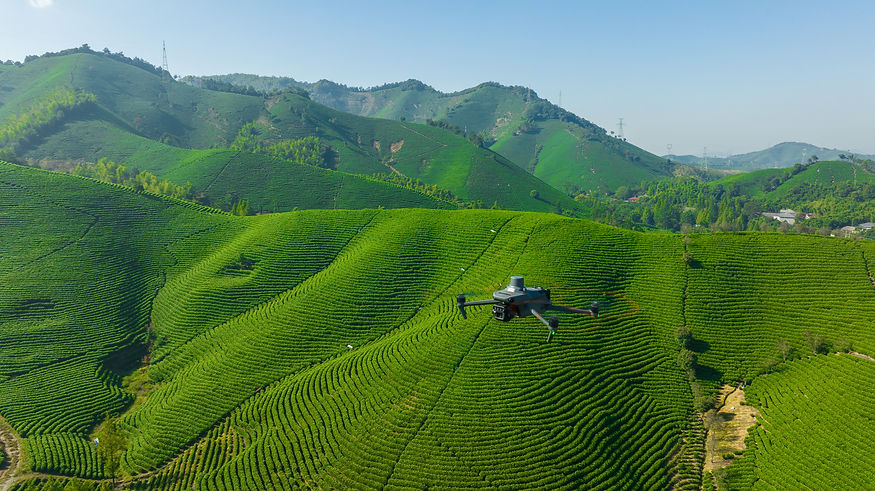
The DJI Mavic 3 Enterprise Multispectral has an RTK module for centimetre-level location, which is also worth mentioning. The drone manufacturer notes that in order to precisely determine the location of each camera’s imaging centre, the aircraft, its camera, and the RTK module must be synchronized at the microsecond level. This indicates that surveys can be carried out by the new DJI drone without the need for ground control locations.
Key Features and Capabilities:
Mavic 3 Enterprise Multispectral also has O3 video transmission, which combines two transmitting channels and four receiving channels, and supports a very long transmission distance of 15 kilometres. Additionally, as would be expected from a Mavic 3 drone, the multispectral version has omnidirectional obstacle sensing to find and avoid objects from all angles.
Additionally, DJI outlines how Mavic 3 Enterprise Multispectral may be incorporated into several ecosystems:
Users can link Mavic 3 Enterprise Multispectral to a third-party cloud platform directly through the built-in DJI Cloud API, which is based on the MQTT protocol in Pilot 2, in order to gather data, live video, photo data, and other information without having to create a separate app. Additionally supported by Mavic 3 Enterprise Multispectral is Mobile SDK 5 (MSDK5), which enables customers to create custom control apps with ease for uses like intelligent monitoring.
Summing Up
The DJI Mavic 3 Multispectral is redefining smart farming by combining advanced aerial imaging with precise agricultural data analysis. With its ability to capture both RGB and multispectral data, it enables farmers to monitor crop health, detect issues early, and make informed decisions.
By integrating drone technology into agricultural workflows, farms can improve efficiency, reduce costs, and increase overall productivity. From crop monitoring to large-scale field analysis, this drone provides a powerful solution for modern precision agriculture.
As the demand for data-driven farming continues to grow, tools like the Mavic 3 Multispectral are becoming essential for achieving sustainable and optimized agricultural operations.
Frequently Asked Questions About Agriculture Drones
It is used to analyze crop health by capturing data beyond visible light, helping farmers make better decisions.
It provides precise crop insights, enabling better irrigation, fertilization, and yield optimization.
Yes, it helps detect plant stress, disease, and nutrient deficiencies early.
No, but they significantly improve efficiency, monitoring, and decision-making.
Looking for advanced agricultural drone solutions?
Contact NineTenths today to learn how the DJI Mavic 3 Enterprise Multispectral and other precision UAV tools can help you improve crop health monitoring, optimize inputs, and boost farm productivity: