Estimated reading time: 9 minutes
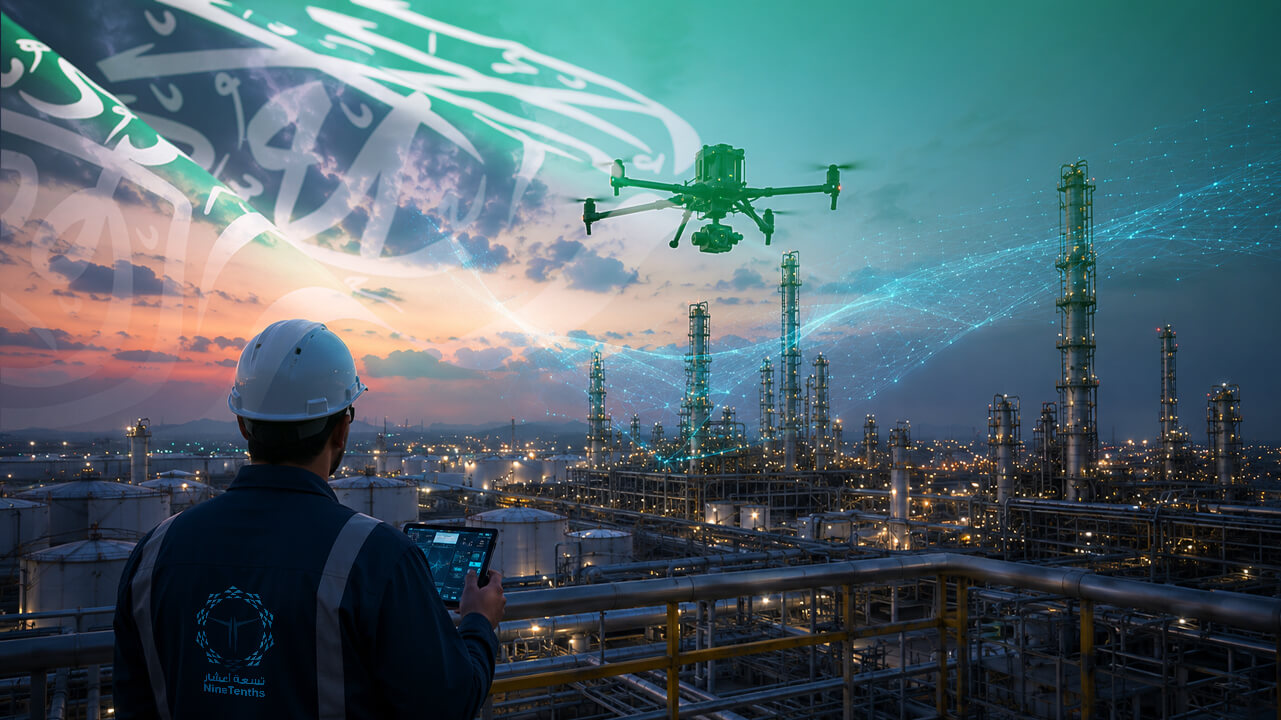
Saudi Arabia’s industrial landscape is evolving at an unprecedented pace. From sprawling oil & gas facilities across the Eastern Province to mega-construction projects under Vision 2030, the Kingdom’s infrastructure demands smarter, faster, and safer inspection methods. UAV (Unmanned Aerial Vehicle) inspection — commonly known as drone inspection — is now at the center of this transformation.
At NineTenths, we are enabling industries across Saudi Arabia to replace outdated, high-risk inspection methods with advanced drone-based solutions that deliver precision data, protect workers, and accelerate decision-making.
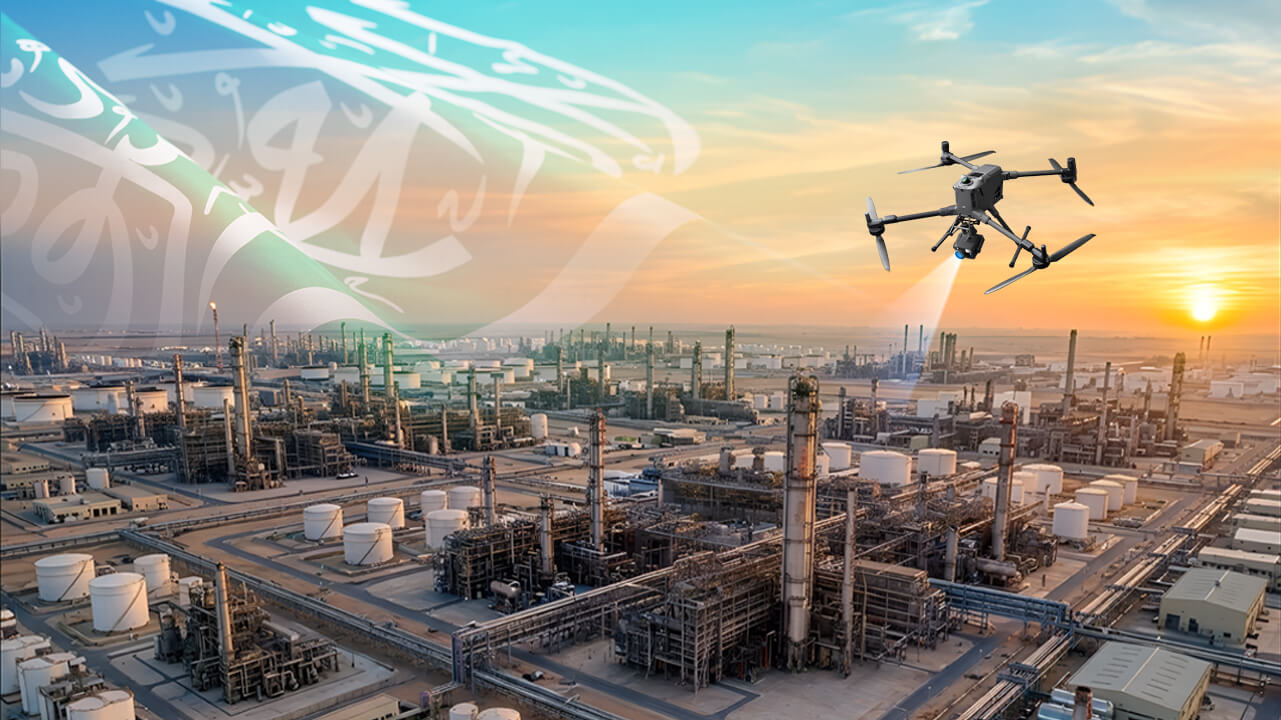
Table of contents
- The Problem with Traditional Industrial Inspection
- Why UAV Inspection Is Growing Rapidly in Saudi Arabia?
- Key Benefits of UAV Inspection Technology
- Industrial Sectors Being Transformed by UAV Inspection in Saudi Arabia
- How to Choose a Drone Inspection Provider in Saudi Arabia
- Why Choose NineTenths for UAV Inspection in Saudi Arabia
- Summing Up:
- Frequently Asked Questions: UAV Inspection in Saudi Arabia
The Problem with Traditional Industrial Inspection
For decades, industrial inspection in Saudi Arabia relied on methods that were slow, costly, and inherently dangerous. Scaffolding, rope access teams, manual surveys, and extended plant shutdowns were the norm — not the exception. Workers were routinely exposed to hazardous environments: flare stacks, confined spaces, high-voltage lines, and remote desert locations in extreme heat.
These conventional approaches carried significant drawbacks:
- High risk of workplace injuries and accidents
- Extensive downtime during inspection periods
- Slow data collection with limited accuracy
- Enormous costs from scaffolding, heavy equipment, and large crews
- Delayed maintenance decisions and reactive asset management
As Saudi Arabia’s infrastructure continues to expand — in scale, complexity, and operational demand — these limitations are no longer acceptable.
Why UAV Inspection Is Growing Rapidly in Saudi Arabia?
Saudi Arabia presents a unique set of operational challenges: vast infrastructure networks stretching across remote desert regions, extreme temperature conditions, continuous operational demands, and a national agenda that prioritizes digital transformation. UAV inspection addresses all of these simultaneously.
As a cornerstone technology aligned with Vision 2030’s digital transformation goals, drone-based inspection enables intelligent asset monitoring, predictive maintenance, and real-time data capture — all without halting operations or putting personnel in harm’s way.
Across the Kingdom, UAVs are now actively deployed for:
- Powerline and electrical transmission inspections
- Solar panel efficiency monitoring and thermal hotspot detection
- Oil & gas tank, pipeline, and flare stack inspections
- Construction progress tracking and site surveying
- Bridge, facade, and structural integrity assessments
- Confined space inspections without human entry
- Autonomous surveillance and perimeter security missions
Key Benefits of UAV Inspection Technology
1. Enhanced Worker Safety
The most critical advantage of drone inspection is eliminating unnecessary human exposure to hazardous environments. Instead of personnel climbing flare stacks or entering confined spaces, UAVs equipped with high-resolution cameras, thermal imaging sensors, and LiDAR payloads perform inspections remotely and safely. This dramatically reduces workplace incidents and brings Saudi companies closer to zero-harm operational standards.
2. Significantly Faster Inspection Turnaround
Industrial drones can cover large and complex infrastructure in a fraction of the time compared to traditional methods. A multi-day scaffolding operation can be replaced by a UAV deployment completed in hours. For industries in Saudi Arabia where operational downtime translates directly to revenue loss, speed is a strategic advantage.
3. High-Precision Data Collection
Modern enterprise drones — including platforms from the DJI Matrice series — are equipped with RTK positioning systems, thermal cameras, and LiDAR sensors that capture inspection data with exceptional accuracy. UAV inspections can identify corrosion and structural cracks, thermal anomalies and equipment overheating, gas leakage indicators, structural deformation, and vegetation encroachment on infrastructure corridors. This enables proactive maintenance strategies rather than costly reactive repairs.
4. Measurable Cost Reduction
Traditional inspection methods demand scaffolding setup, rope access teams, heavy equipment mobilization, and often a full plant shutdown — all of which carry significant costs. UAV inspection eliminates most of these expenses while simultaneously delivering higher-quality data. Many Saudi organizations are now treating drone inspection as a core part of their asset integrity management programs, not merely an alternative.
Industrial Sectors Being Transformed by UAV Inspection in Saudi Arabia
Oil & Gas
Saudi Arabia’s oil & gas sector is one of the most active adopters of UAV inspection technology globally. Drones are deployed for tank and vessel inspections, flare stack assessments, pipeline monitoring over long distances, thermal anomaly detection, methane leakage identification, and perimeter surveillance. Autonomous drone operations and drone-in-a-box systems are further enabling continuous real-time facility monitoring without human intervention.
Renewable Energy
As Saudi Arabia accelerates investment in solar and wind energy under Vision 2030, UAV inspections have become critical for maintaining renewable energy infrastructure. Drones help operators identify solar panel degradation and efficiency loss, thermal hotspots within PV arrays, dust accumulation impacts on panel output, structural conditions of mounting systems, and transmission infrastructure integrity. NineTenths has supported renewable energy projects across Saudi Arabia with UAV-based inspection and aerial surveying solutions.
Construction & Mega Projects
Saudi Arabia’s giga-projects — NEOM, Diriyah, the Red Sea Project, and beyond — require continuous monitoring, precision documentation, and accurate progress reporting. UAV inspections provide construction teams with real-time aerial visibility, high-accuracy site surveys, structural assessments, safety compliance documentation, and digital twin generation that serves stakeholders throughout the entire project lifecycle.
The Role of AI, Automation, and Digital Twins
The future of industrial inspection extends well beyond aerial imaging. Today’s most advanced UAV ecosystems integrate AI-powered analytics engines for automated defect detection, autonomous flight planning systems for mission consistency, cloud-based asset management platforms for centralized data access, 3D digital twin generation for virtual asset modeling, and real-time monitoring systems that trigger alerts without human review delays.
These integrations are enabling a fundamental shift — from reactive maintenance that responds to failures, to predictive and intelligent asset management that prevents them.
At NineTenths, we continue to develop and deploy advanced UAV capabilities including autonomous operations, LiDAR-based inspections, and AI-driven data workflows to support Saudi Arabia’s industrial transformation toward Vision 2030 objectives.
How to Choose a Drone Inspection Provider in Saudi Arabia
How to Choose a Drone Inspection Provider in Saudi Arabia
- Verify Industry-Specific Experience
Confirm the provider has documented experience in your specific sector — oil & gas, renewable energy, utilities, or construction — and can demonstrate past projects within Saudi Arabia’s operational environment.
- Assess the Drone Fleet and Payload Capabilities
Ensure the provider operates enterprise-grade platforms such as the DJI Matrice series with appropriate payloads — thermal cameras, LiDAR sensors, gas detection systems — matched to your inspection requirements.
- Confirm Regulatory Compliance and GACA Approvals
Ensure the provider holds all required licenses from the General Authority of Civil Aviation (GACA) and complies with Saudi drone operations regulations. Non-compliant operations expose your organization to legal risk.
- Evaluate Data Deliverables and Reporting Quality
Request sample inspection reports, data outputs, and analytics capabilities. High-quality providers deliver structured, actionable reports — not just raw footage — including thermal analysis, 3D models, and prioritized maintenance recommendations.
- Understand AI Integration and Automation Capabilities
Ask whether the provider integrates AI-powered analytics, autonomous flight systems, and digital twin generation. These capabilities determine whether drone inspection delivers one-time value or a continuous intelligent monitoring program.
- Request a Pilot Assessment or Site-Specific Proposal
Before committing to a full program, request a pilot inspection or detailed site-specific proposal. A reputable provider will tailor their approach to your infrastructure, operational constraints, and reporting requirements.
Why Choose NineTenths for UAV Inspection in Saudi Arabia
As a leading drone solutions provider in Saudi Arabia, NineTenths delivers specialized UAV inspection services designed for demanding industrial environments. Our capabilities include industrial UAV inspections across oil & gas, utilities, and construction, LiDAR surveying and precision mapping, thermal and visual inspection with enterprise-grade payloads, autonomous drone operations and drone-in-a-box deployments, drone training programs and fleet maintenance, and UAV fleet management systems for long-term asset monitoring programs.
We operate advanced enterprise drone platforms paired with industry-grade sensors to deliver reliable, accurate, and mission-ready inspection results across Saudi Arabia’s most critical infrastructure sectors.
Summing Up:
UAV inspection technology is no longer an emerging concept — it is an operational reality actively transforming industrial infrastructure management across Saudi Arabia. By enhancing worker safety, reducing operational costs, accelerating inspection timelines, and delivering highly accurate analytical data, drones are becoming indispensable tools for modern industrial asset management.
As Saudi Arabia advances toward its Vision 2030 goals and deepens its commitment to digital transformation, UAV inspections will play an increasingly central role in building the smarter, safer, and more efficient industrial future the Kingdom demands.
Frequently Asked Questions: UAV Inspection in Saudi Arabia
UAV inspection uses unmanned aerial vehicles — commonly called drones — equipped with cameras, thermal sensors, and LiDAR to inspect infrastructure remotely. Unlike traditional inspection, which requires scaffolding, rope access, or physical entry into hazardous areas, UAV inspection allows operators to collect high-quality data safely, rapidly, and without shutting down operations.
Yes. Drone operations in Saudi Arabia are regulated by the General Authority of Civil Aviation (GACA). Licensed providers — including NineTenths — operate under GACA-approved frameworks that ensure legal compliance for commercial UAV inspection activities across the Kingdom.
UAV inspection delivers the highest value in oil & gas (tank, pipeline, and flare stack inspections), renewable energy (solar panel monitoring and thermal analysis), utilities (powerline and transmission inspections), and construction (progress monitoring, site surveys, and digital twin generation). All of these sectors are critical to Saudi Arabia’s Vision 2030 development agenda.
Thermal UAV inspection uses drones equipped with infrared cameras to detect heat signatures invisible to the naked eye. This enables identification of equipment overheating, electrical faults, insulation failures, gas leaks, and solar panel degradation — all without physical contact or plant shutdowns.
Drone inspection costs vary based on the scope, asset type, payload requirements, and mission complexity. However, UAV inspection consistently delivers significant cost savings compared to traditional methods by eliminating scaffolding, reducing downtime, and decreasing crew requirements. Contact NineTenths for a customized quote based on your specific infrastructure and inspection objectives.
Professional UAV inspection delivers structured reports including high-resolution visual imagery, thermal analysis maps, LiDAR point clouds and 3D models, defect identification with GPS coordinates, prioritized maintenance recommendations, and digital twin assets for ongoing asset management. NineTenths provides actionable, decision-ready reports for all inspection missions.
In most cases, yes. One of the primary advantages of UAV inspection is the ability to inspect active facilities without requiring a full operational shutdown. This is particularly valuable in Saudi Arabia’s oil & gas and energy sectors, where downtime has a direct impact on production and revenue.
NineTenths aligns directly with Vision 2030’s digital transformation mandate by providing technology-driven inspection solutions that improve operational efficiency, enhance safety standards, reduce environmental risk, and enable smarter industrial asset management across Saudi Arabia’s key infrastructure sectors.
Ready to Upgrade Your Inspection Operations?
Discover how NineTenths UAV inspection solutions can improve safety, reduce costs, and deliver better data across your industrial assets in Saudi Arabia.